Recruitment technology didn’t start out modular. It became modular because every employer’s hiring process is a Frankenstein’s monster of legacy decisions, half‑finished projects, and tools bought during a panic. The ATS sits at the centre like an ageing boiler in a Victorian tenement – still working, still essential, but surrounded by pipes added over decades by different plumbers with different ideas of “best practice”.
So organisations build a stack.
Not because they want to, but because they have to.
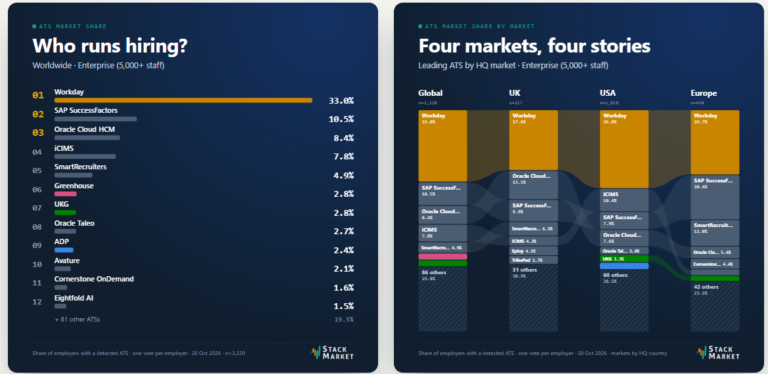
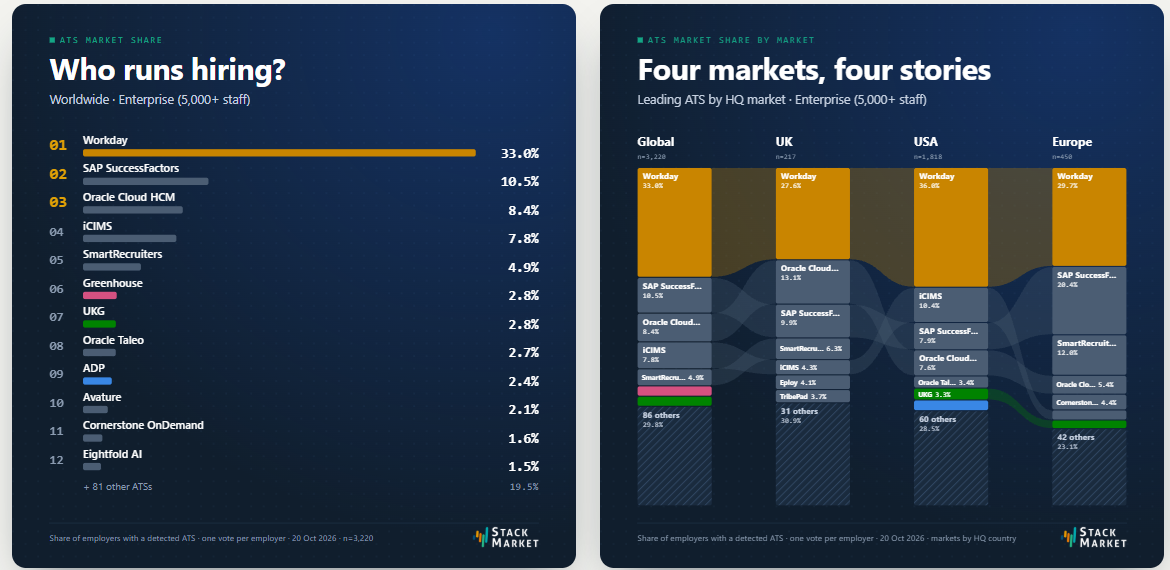
An ATS alone usually can’t do employer branding. It can’t run talent pools. It can’t deliver assessments. It can’t schedule interviews. It can’t host video. It can’t manage referrals. It can’t run sourcing campaigns. It can’t do matching. It can’t do onboarding. And if it can, it usually shouldn’t. Apologies to SmartRecruiters , Ashby , Tribepad | B Corp Certified , and ICIMS et al.
So employers bolt on modules. Then more modules. Then integrations. Then middleware. Then “custom workflows”. Then a spreadsheet to track the custom workflows.
Before long, the stack looks less like a system and more like a Jenga tower built by a committee.
Is it really modular? Or is it just fragile?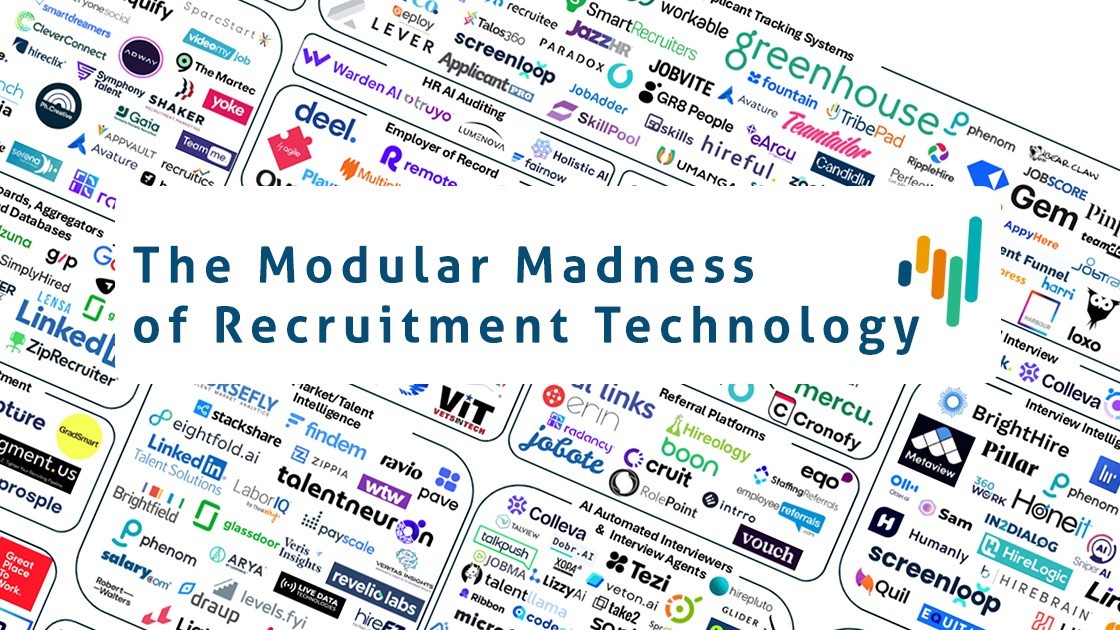
We talk about recruitment tech as if it’s Lego (and you know I love Lego) – neat blocks you can swap out whenever you fancy a new colour. But anyone who has ever replaced a scheduling tool knows it’s more like open‑heart surgery performed while the patient is running a hiring campaign.
Replace the CRM? You lose your talent pools. ( Loxo )
Replace the assessment tool? You break your workflows. ( Metaview )
Replace the video interview platform? You break your scheduling. ( Hirevue )
Replace the sourcing tool? You break your analytics. ( Juicebox )
Replace anything? You break something.
The idea that you can “just swap out a module” is one of the great myths of recruitment technology. It’s technically true, in the same way that you can in theory knit a parachute after having jumped from the plane.
Is there such a thing as the optimal tech stack?
Every vendor will tell you yes, and every employer who has lived through a migration will tell you no.
The “optimal stack” depends on:
There is no universal optimal stack. There is only the stack that works well enough for your organisation at this moment in time.
And even that is temporary. These are all moving parts.
Because the moment you add a new sourcing channel, or change your ATS, or adopt AI screening, or restructure your TA team, the stack shifts again.
Recruitment technology is not modular. It is dynamic. It is interdependent. It is contextual. It is messy.
And it is almost impossible to understand from the outside.
The real question isn’t “What’s the best tech stack?”
It’s “How do we make sense of the stack we already have?” The answer often lies in learning from others, or re-implementing the technologies you already have.
Employers don’t need more tools. They need more clarity. (OK sometimes they really need more tools).
They need to understand:
The industry has spent a decade building new tools. However, it has spent almost no time mapping them.
We’ve built the world’s most complex recruitment technology ecosystem – and we’ve never drawn the diagram.
Maybe it’s time we did.
Correction: Maybe we already did …
Credit to Glenn Lindley – I pinched the image from his fabulous TAtechScape.